Friday, September 30, 2011

Other root vegetables - parsnip

Parsnips are just now coming into their own with no need to worry about rushing to harvest before frost. In fact freezing actually improves root quality so bring on the cold weather. Roots can be dug as needed or stored moist (vented plastic bags) in the refigerator for a couple weeks so starches are converted to sugar for roots to have a better flavor.

Parsnips are grown from seed planted in early spring (April). 'Harris Model' and 'All American' are two standard varieties but most should grow well here. Fresh seed is a must as old seed germinates poorly. Like their parsley family cousin, carrots, seed takes 2 to 3 weeks to germinate. Seed is often over-planted because of poor germination and then seedlings thinned to 4-6 inches between plants.

This is a full season crop averaging 110 to 120 days (4 months) to mature. A deep, loose soil is a must just like carrots. Once top foliage grows to cover over, most weeds should cease being a problem. Supply steady moisture to avoid root disorders but note overwatering can cause forking and hairy roots. Moisture fluctuations produce cracking. Organic mulches (grass clippings or straw) in summer are helpful for weed and moisture control.

Parsnips are a different root vegetable to try for a variation from carrots and beets.

Photo credit: Parsnips in raised bed, harvested parsnip roots - both Carl Wilson

Wednesday, September 21, 2011

Seasonal roundup

Powdery mildew
With cooler weather comes a decline in production of summer squash and increase in powdery mildew on both summer and winter squash. Hopefully many fruit have been harvested or are near-ready for harvest. Photo is of powdery mildew on Kabocha winter squash. Powdery mildew decreases photosynthesis and weakens plants affecting nutrients available to form fruit and their flavor.

Control is mostly preventive through a full sun location and good air circulation. Water at the soil level rather than on leaves. Potassium bicarbonate (Remedy) can be used as a preventive or in the very early stages of infection. Some fungicides such as neem (Greenlight Powdery Mildew Killer) and horticultural oil do have some effect on killing existing infections.

Cabbage aphids
They're back......! Cabbage aphids thrive in cool fall weather and can be a real problem on savoy cabbage and Brussel sprouts (photo). They penetrate in and among the curled leaves and where sprouts set down in the leaf axil. Their feeding distorts and contaminates the harvest. Cabbage aphids overwinter on wild mustard family plants so weed control near the growing area is important.

Control is tough because of their waxy covering that makes these gray-green aphids appear bluish-white. Lady beetles don't like them because of the wax. Syrphid flies are another predator that may help. Unfortunately the activity of predators decreases late in the season when short days and cool temperatures reduce the activity of natural enemies. Parasitic wasps aid the cause but parasitized aphids tend to tightly stick to foliage compounding contamination problems.

Botanicals such as azadirachtin insect growth regulator, neem oil or pyrethins can be tried as well as horticultural oils when insect population thresholds warrant applications.

Destroy crop residue after harvest to minimize overwintering populations.

Photo credit: Powdery mildew on Kabocha squash, Cabbage aphid on Brussel sprouts - both Carl Wilson

Thursday, September 8, 2011

The big cool down

In our semiarid climate, it's always amazing how fast the weather can cool down as the days shorten. Some folks I talked with the last week of August were despairing that it would cool down anytime soon. Then, wham. The first of September was officially 96 degrees F in Denver with a 68 degree low. By the 3rd it was 71 degrees with a 48 degree low.

The losers in the vegetable garden are the warm season vegetables. Tomato fruit have slowed ripening and summer squash are not producing fruit seemingly overnight. The winners are the cool season vegetables for those who had the space and foresight to seed them mid-summer (July).

Nights under 55 degrees F will cause tomatoes to shut down for a few days to a week, especially with nighttime temperatures reaching 41 degrees F, the official low on Sept 4th. Mature fruit on these plants will eventually ripen but the cold affects flavor. New and young fruit tend to stop development.

This is the time to think about season extension growing tunnels if you want to keep these crops producing through the fall. When temperatures drop 14 degrees below the desired 55 degree nighttime, tunnels almost have to be plastic on hoops as row cover fabric only provides a few degrees of difference.

Even though these temperatures are ten degrees below normal and we will likely still see some warm days, more nights in the forties are predicted over the next week. The cool season leafy vegetables like lettuce, spinach and kale are loving the temperature change to cool and don't need season extenders in early fall.

Photo credit: Two types of kale and lettuce - Carl Wilson

Thursday, September 1, 2011

Beet leafminer

Beet or spinach leafminer is generally more of a cosmetic pest on beets grown for roots. For greens, it is another story.

The leafminer is the larva of a 1/4" gray fly with black hairs. Eggs are laid on leaves or several plants including beets, spinach, chard and weeds such as lambsquarters. Small maggots emerge and tunnel between leaf surfaces. The narrow tunnels merge into pale blotches (photo) and damaged leaves are distorted. Maggots drop to the ground to pupate and change into adult flies.

Leafminer emerges in April and May and several generations occur each year. They are active now on spinach and beets planted mid-summer for fall harvest and particularly common in gardens where one or the other crop is continuously grown.


Eggs are distinctive (photo) because they are white and laid in small masses. One of the simplest means of control is to check for egg masses and hand crush. Pinch leaves to kill karvae inside when mining is observed. Leaves with actively growing larvae also can be picked and destroyed or bagged for trash to be taken off site. Leaving picked leaves on the ground allows leafminer to complete its lifecycle.

The use of floating row cover fabric can help if put in place before flies emerge and the crop is in a different garden area than the previous year. You don't want flies emerging from the soil under rowcover with their favorite food handy and protected.

Control weeds around the garden and rotate crops for control.

Photo credit: Leafminer blotches on beet leaves (Carl Wilson), Leafminer eggs (CSU Extension)

Monday, August 29, 2011

Banner year for tomatoes

Although many people on the Front Range may be tired of summer heat, there is always a plus side. One is that it has been a banner summer for productive tomatoes. This is due to hot days but more so to warm nights. Many nights have been in the sixties degrees F instead of fifties as is so often the case in Front Range summers.

After a cool May and transplanting better delayed until the first week in June, some people were despairing of realizing a tomato yield due to a late start. This has obviously resolved itself and many varieties are showing good performance.

In full sun, 80 day heirloom 'Cherokee Purple' in our garden is doing as well as 73 day modern 'Big Beef'.

Three short season varieites tried this year are of note. 70 day 'Azoychka' from Russia (photo above right) is a mild acid, yellow fruited type that is producing well. A 68 day pink Asian type, 'Zhefen Short' (photo left) from China is yielding a good crop of nice plump fruit. The heirloom 75 day 'Black Cherry' (photo right) is also bearing nicely.

Shorter season types of 70 days or less including 'Early Girl' (62 days) and heirloom 'Stupice' (52 days) from Czechoslovakia (photo right) are still good bets especially if you have only part day sun or a cooler location. They bear early and can perform well in summers that don't have warm nights. Both have produced well for us this year.

Harvest from the demonstration garden at our Denver office is donated to feed the hungry. Consider donating your excess bounty to a local food pantry or soup kitchen.

Photo credit: 'Azoychka', 'Zhefen Short', 'Black Cherry', 'Stupice' tomatoes - All Carl Wilson.

Monday, August 22, 2011

Harvesting fall squash

I've received several questions about when fall squash are ready for harvest. Fall or winter squash should be harvested when fully mature which is more typically in September than August. Immature fruit have a watery flesh, don't store well and if harvested are eaten like summer squash. Not all of them will taste good when eaten immature, hubbard and golden acorn reputedly are O.K.

As fall squash matures, the flesh becomes drier and sugars develop. Both changes contribute to storing quality. Some types will store up to 3 or 4 months when harvested at the right time and stored under ideal conditions (dry and 55 degrees F). One inch of neck should be left on the fruit and it should be hard and dry when harvested.

General signs of maturity are skin that can't be easily dented with a thumbnail, color that is true to mature type, and reaching the proper number of days to harvest.

Certain types of squash have other things to look for. On acorns, the groundspot where fruit touches the ground will change from yellow to orange. Carefully turn fruit over to check being careful not to detach from the stem in case you have to roll it back to let it ripen further (photo acorn above left - still yellow: immature). On golden acorns, the groundspot doesn't show like it does on green acorns. Yellow skin should turn a deep golden yellow at maturity on these.

Butternut squash are ripe when vine growth stops and skin color changes from a light whitish tan to a deep tan (photos below - left photo immature, photo right fruit medium mature and still needs time to turn a deep tan).


Vegetable spaghetti squash are mature when they turn from a light yellow to golden yellow (photos below). Buttercup squash are ripe when dark green fruit are 5 to 6 inches across and stop growth. These are the most common varieties grown by home gardeners because their approximately 80 to 85 days to harvest makes them reliable in our climate.


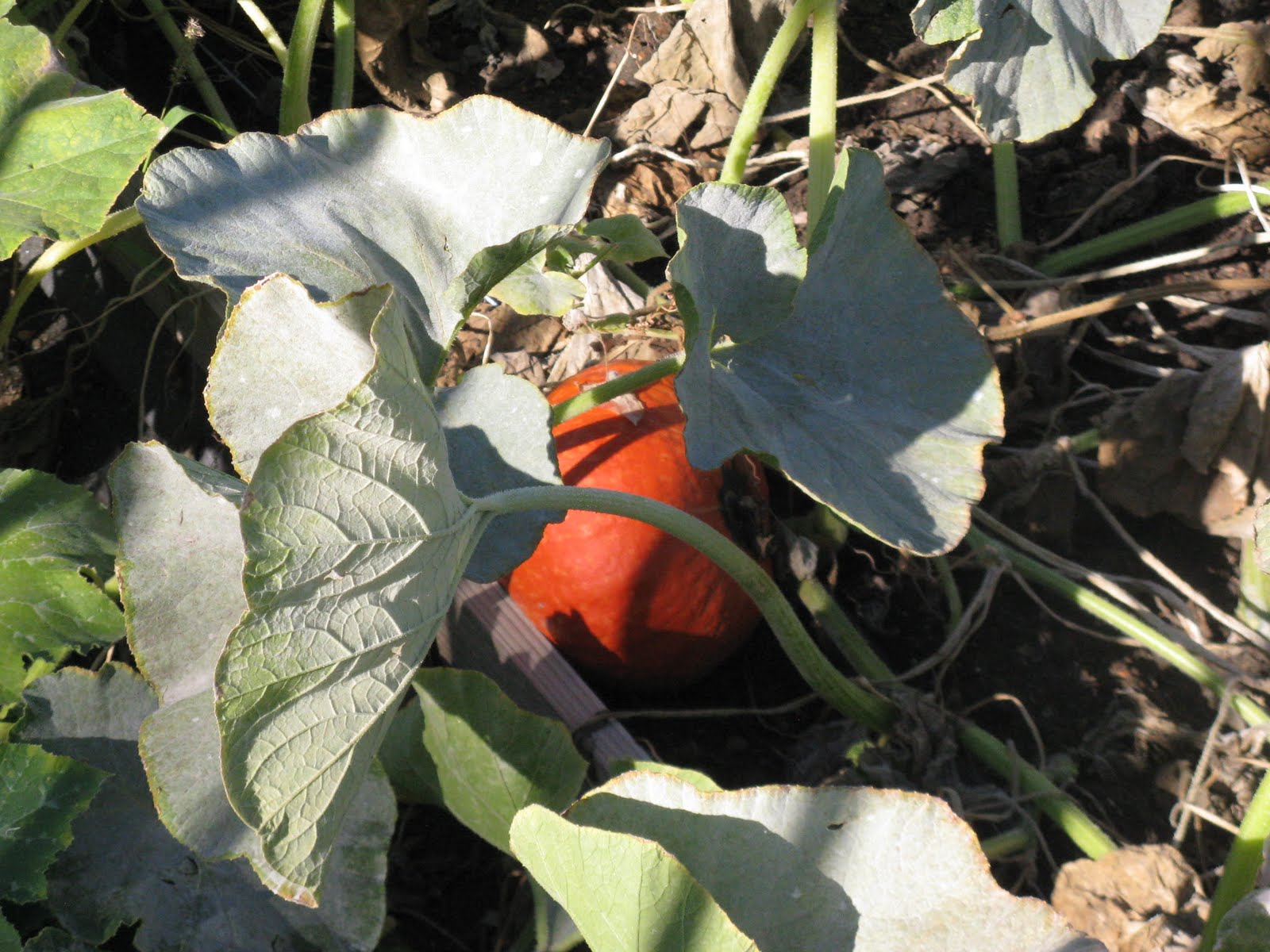
Blue hubbard (blue-gray) and Boston marrow (reddish-orange) are occasionally grown. They take a full season, 110 and 120 days respectively, and are mature when vines die down.


Photo credit: Rotating acorn to check maturity, Butternut immature and medium mature, Vegetable spaghetti immature and mature - All Carl Wilson