Friday, February 2, 2018

Winter Musings

Winter cover crop B.R.
 (before rabbits)
Cover crop A.R.
(after rabbits)
As I look at my winter cover crop planting clipped low by rabbit(s), I’m waxing philosophical about gardening and working with nature. It was planted in late September and is well established with the warm fall and winter to date.

While much of the top growth is lost, I know there is substantial root growth that also will provide organic matter for soil improvement. 

It will grow out again early before I turn it under in spring so I’m not too worried about gaining benefits from this winter rye/Austrian winter pea mixed planting. There is the perfect and then what results once the real world has its say.

Speaking of the real world, I heard lots of complaints about poor tomato yield last season. Me too. While we didn’t have any 100 degree weather, there was enough high eighties and ninety degree weather to cause poor pollination and blossom drop. 

My plants finally achieved blossom set in mid-summer and particularly the small-fruited varieties had time to produce a late-summer crop.

It’s good that every year is different and hope springs eternal with gardeners including me. I already have purchased tomato seed to start this season’s transplants come spring.

 Photo Credit: Both photos Carl Wilson 

Monday, June 19, 2017

Time to mulch warm season veggies

Tomatoes newly mulched
with grass clippings
With the arrival of summer this week but more importantly now thoroughly warm soils, mulching of warm season vegetables is in order for saving water.

Mulching is frowned on earlier because it delays heating of soils to temperatures suitable for warm season vegetable development. Later mulching is especially important for peppers but also tomatoes, eggplant, etc.

Grass clippings from lawns not treated with herbicides and not having a lot of weed seed work well. A one to two inch layer is sufficient. It's better to apply two thin layers a week or more apart rather than a thick layer that starts to rot and smell. Straw, again from fields not treated with herbicides and with low weed seed content, also works well.
Tomatoes grow in full
sun in containers with drip
irrigation on driveway

I'm often asked how to grow tomatoes and other fruiting vegetables at homes where full sun is at a premium. How about in containers on the driveway as this enterprising homeowner did? You can even equip them with drip irrigation for easy watering. Driveways often are free from obstructions blocking sunlight if patios or decks have pergolas or are covered for shade.

Photo credit: Grass mulched tomatoes and Driveway container tomatoes both credit Carl Wilson.

Thursday, May 25, 2017

Is setting up Wall O' Water's still worth it?

Newly set up Wall O' Waters
I've written before about the Wall O' Water product for season extension in Colorado's high and dry continental climate. This is the one with tubes in the side of the plastic cone that you fill with water to absorb the sun's heat and keep the plant growing within them warm.

What about setting them up now in late May when the growing season is supposedly on and the danger of a spring freeze low?

My answer is it is still a good idea for tomatoes, peppers, eggplant and warm season vegetables. Why? Now they can be used not so much to extend the season and protect from a spring freeze but to warm plants at night.

Have you noticed that nights are still in the forties F?  As I mentioned in the April 22 post on "Choosing tomato varieties", the minimum nighttime temperature for growing tomatoes is 55 degrees F. In our high elevation climate with low humidity, there isn't anything to hold in heat on clear nights so radiational cooling is extreme.

If you look at historical average low temperatures for Denver, we don't exceed 55 degrees F until June 22nd. Even so, we often have nights over the summer below 55 degrees in June, July and August - 16 nights in 2016!

Go ahead and set up a Wall O' Water when planting your tomatoes out over Memorial Day to take the chill off the night temperatures. Your plants will get up and growing faster for your effort.

Photo Credit: Newly set up Wall O' Water - Carl Wilson

Click here for manufacturer's website Wall O' Water

Wednesday, May 3, 2017

Determining tomato varieites

The pun in the title is meant to call attention to the growth habit of tomatoes as gardeners pick varieties for planting this month.

Determinate tomato growth ends in a flower while indeterminate types produce vegetative growth and flowers until frost. Of course there are some inbetweens. They are  known as semideterminate types but even that doesn't fully capture growth habits as some are sprawling and some short, upright plants.

Determinate 'Fantastico' F1 hybrid
grape tomato. All-America Selections.

What's the big deal about growth habit other than considering it in allocating garden space, planting distances and staking needs? A lot.

Last time I wrote about the narrow temperature range for pollination of flowers. Determinate types tend to produce flowers all at once and then not many additional ones as they top out. That is great if you want many tomatoes at one time for canning or marketing. It doesn't work out so well if the bulk of flower production occurs during a cold or hot period that is poor for pollination and results in few fruit.

The other consideration is fruit flavor. As Randy Gardner, tomato breeder at the Mountain Horticultural Crops Research station of North Carolina State University, has been noted as saying, the fruit of determinate types will never have the flavor of indeterminate types. They don't produce the ample amount of leaves to photosynthesize and supply fruit that indeterminate types do. He is the breeder of the "mountain" tomato series including 'Mountain Spring' and 'Mountain Merit'. Both are 70-some day to maturity types and are recommended for commercial growers in Colorado.

Mr. Gardner has also said in interviews that his varieties are bred for commercial producers but were adopted by home gardeners in the East when an outbreak of late blight widely took out plants a few years ago. We have little problem with late blight in the dry West, especially if you water at the soil level and keep foliage dry (no overhead sprinklers).

While Mr. Gardner and other plant breeders have bred more disease resistance into their hybrids than heirlooms have, that generally isn't a big reason for choosing varieties here unless you have a problem with TSWV or some other specific disease.

In general I recommend that home gardeners choose indeterminate types or at least a mix of indeterminate and determinate. Even if you want to grow tomatoes for paste you have the choice of indeterminate 'San Marzano' or newer, shorter-season indeterminate hybrids rather than determinate 'Roma'.

Know the growth habit of the variety you are planting as well as the days to maturity (80 days or less in Denver) before purchase.

Photo Credit: 'Fantastico' F1 tomato - All-America Selections

Saturday, April 22, 2017

Choosing tomato varieties


The Front Range has varied topography, elevations, location in relation to nearby mountains and microclimates. Every season is different as temperature and rainfall vary through the growing season. A tomato variety that performs well one year may not the next.

For example last season (2016) many people complained that they had few ripe tomatoes by late summer. Summer heat was likely to blame for poor pollination and fruit set. Denver had 44 days from June through August with temperatures over 85 degrees F, temperatures where blossom drop is likely. Greeley had 68 days.

Fortunately we had a fall with extended favorable temperatures so gardeners had time to ripen late-set fruit.

Not only temperatures too high to set flowers but also night temperatures too low are a factor. Our neighbors to the north in Cheyenne had 52 nights in the June to August 2016 period with temperatures under 55 degrees F, poor conditions for pollen viability and pollen tube growth to set flowers. Denver had 16 nights in the same period and Greeley 33.

While it's challenging to choose tomato varieties to grow in our Front Range conditions, the good news is that there are lots of varieties out there and more every year.

My recommendation is for short season varieties (80 days to maturity in Denver, 70 days or less in Cheyenne). Varieties with northern adaptation are also good candidates. These might include Russian heirlooms such as 'Azoycha', 'Aurora', 'Anna', 'Alaska', 'Paul Robeson', 'Black from Tula' or German 'Gardener's Delight' , 'Blondkopfchen' and 'Bloody Butcher'.

Also hybrids such as 'Northern Exposure', 'Juliet', 'Parks Whopper', 'Big Beef', 'Summer Girl' and 'Fourth of July'. New this year is an All America Selection winner 'Midnight Snack', a cherry type that is touted as an advance in flavor for purple types.

Hybrids from crossing heirlooms are also gaining popularity and include 'Brandy Boy,' 'Big Brandy', 'Genuwine' and 'Perfect Flame'.

I also recommend a mix of varieties including both heirlooms and hybrids. Chances are that if one doesn't perform well under this year's weather conditions, another will.

Photo credit: Windowsill tomato starts - Carl Wilson

Monday, April 3, 2017

Spring freezes and fruit trees

Peach bloom April 1, 2017
A recent look showed peaches in full bloom in Denver during a week in which night temperatures are expected to drop to the mid to low twenties F.

Spring freezes during bloom are the biggest concern for home fruit growers.

While a dry March had few cold nights, April is shaping up to have much more variable weather. This includes rain/snow storms followed by cold nights due to radiational cooling after storms pass and skies clear.

USDA Hardiness Zone 6 or better yet Zone 7 (Colorado's West Slope) are better areas to grow peaches than Zone 5 Denver. While there are Zone 5 peaches, many backyard growers don't hunt for and plant them.

Yellow Delicious apple
bloom April 1, 2017
Peaches aren't the only trees with blossoms out now. This Yellow Delicious apple tree is well on its way to having flowers out during this week's expected cold nights. Yellow Delicious is a medium chill apple (600 to 700 chilling hours), fireblight susceptible and not on my list of recommended varieties for the Front Range.

Honeycrisp is a medium to high chill apple (800 to 1000 chill hours) that is more fireblight resistant and on my recommended variety list. As you can see in the photo, it breaks bud later than Yellow Delicious.

Honeycrisp apple branch
March 30, 2017
What can you do with a tree in bloom when frost is expected? Homeowners with young (short) or dwarf trees can throw a plastic cover over them and use a heat source underneath. While there may be some heat in the ground to trap after a warm March, you will have to supplement as soils aren't that warm yet.

Lights with old-style incandescent bulbs or any bulbs that produce heat will work. Do be mindful of fire safety when using lights under covered trees and remove tarps the following morning to avoid overheating trees on sunny days.

See the CSU Extension Garden Note 722 "Frost Protection and Extending the Growing Season" section on Lights for Addtional Heat for a description of using plastic covers and Christmas lights for warmth. Does anyone have another favorite way to provide supplemental warmth under a covered fruit tree that they want to share?

Photo credit: All photos Carl Wilson

Monday, March 13, 2017

Fruit tree bloom could be early?

Apricot 'Sungold' Mar 11, 2017
This week's forecast calls for weather not just in the sixties, but reaching into the seventies and possibly even eighty degrees F by the coming weekend. If the warm weather we've been having causes early bloom of fruit trees, blossoms could be caught by freezes.

Apricots are notorious for early bloom. Pictured is Prunus armeniaca 'Sungold' at Denver Botanic Gardens that was in full bloom this past weekend. Apricots may only bear fruit one year out of five (?) here on average because blossoms get caught by freezes in late March and April. The good thing about apricots for a homeowner is that they make a handsome ornamental landscape tree even if there is no fruit crop.

'Sungold' apricot bloom closeup
The bigger concern is with our other fruit tree species that may start to break bud as chilling requirements are met and temperatures allow them to resume growth. They need moisture to do this as well.

Along with cold temperatures, moisture has been lacking so far this spring. Watering your fruit trees is likely a good idea on the Front Range if the current dry conditions continue. Thankfully, our mountain snowpack is now around 130% of normal so we have water to irrigate.

Photo credit: Both apricot photos Carl Wilson

Friday, January 27, 2017

New Vegetables for 2017

'Patio Choice Yellow' tomato
Got small spaces? 'Patio Choice Yellow' F1 tomato may be right for you.

An All-America Selections winner, this tomato is a compact, determinate plant growing only 15 to 18 inches tall. It's the perfect size for container growing on a balcony or other small space.

Vines can bear 100 fruit and begin bearing in only 65 days from sowing seed.  The 1 inch bright yellow fruit are mildly sweet with a touch of acid.

'Antares' F1 bulb fennel
Why not try something new in your garden this year? 'Antares' F1 fennel not only produces an edible bulb, it's fine textured fronds are very ornamental in the garden. You can grow the plant for its culinary seed and it is also a favorite food for swallowtail butterflies and other pollinators.

The bulbs are said to have an improved, almost sweet licorice-anise flavor as compared to other market varieties. It is also a week slower to bolt.

Fennel is a warm season vegetable that will grow bulbs 4 to 5 inches in diameter and foliage 24 inches tall. Grow in rows 6 inches apart with 24 inches between rows. The plant is ready to harvest 68 days from sowing seed or 58 days from transplanting. Plants can be grown in a container if desired.

Photo credit -  All-America Selections

Tuesday, October 4, 2016

Pumpkins for many purposes

Pumpkins grow in a south-
facing bed with strawberries
(Photo credit Carl Wilson)
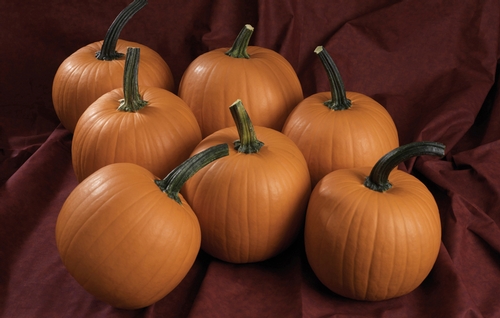
Pumpkins, Cucurbita pepo, are easy to grow if you have room. A 10 to 15 foot vine spread is typical although there are a few bush type varieties (see Wee-B-Little below). Plant from transplants as soon as the weather is warm because they require 90 to 120 days to harvest.

In the photo a home entry walkway is bordered with a bed used to grow strawberries in early summer and pumpkins for fall. A few tulips come through in spring to add some color to this garden. Talk about making good use of garden space for many purposes!

You may want to grow pumpkins for one or many uses including decoration, cooking and baking. Fruit size may also be important to you. Know that there are pumpkins to fit most any requirement.

Baby Bear 
Baby Bear is a small, 3.5 to 5.5 inch pumpkin weighing in at 1.5 to 2 pounds. It is just the right size to use for decoration and sweet so it can be used for pie fillings.

Hijinks
Hijinks is slightly larger at 7.5 inch diameter and 7 to 9 pounds. It's blocky round shape makes it ideal for carving.

Cinderella's Carriage
The pink-red color of Cinderella's Carriage variety will fulfill the fairy-tale dreams of any child. Vines grow flat fruit up to 18 inches round and weighing up to 20 pounds.  The yellow flesh is mildly sweet and ideal for soups and baking.

Pepitas
Pepitas is a new 2016 twist in pumpkins with it's yellow-orange fruit striped with green. Twelve inch round fruit weigh in at about 12 pounds. The hulless seeds can be slow roasted for nutritious snacks and yellow flesh eaten or baked.

Wee-B-Little
Finally, if you have 6 to 8 feet of space try growing Wee-B-Little, a bush type. Fruit is 3.5 inch in diameter and skin a smooth, deep orange. It can be used for decoration, crafts and makes a tasty vegetable when baked as a mature winter squash.

All five varieties mentioned are All-America Selections winners that should grow well in the Intermountain West.

Photo credit - All-America Selections unless noted

Friday, September 9, 2016

Good year for fruit on the Front Range


It is often said that spring freezes are the biggest danger to fruit growing. This year many areas of the Front Range were spared freezes at flowering resulting in generally good fruit set.

Another reason for heavy fruiting is that stored energy is high because many trees bore little fruit in 2015. A warm fall in 2014 didn't allow many trees to prepare for cold weather. Sudden subzero temperatures in early November 2014 following the warm fall caused freeze injury to a variety of plant tissues some affecting flower buds. That and usual spring freezes resulted in generally light crops in 2015. Not using energy on fruit last year left trees with ample stores to carry a large crop to harvest this year.

It will be a good year for gleaning to donate to food pantries but do check with landowners first.

This street-side apple in Louisville, Colorado also illustrates another point. Trees sited in heavily irrigated and fertilized lawns often respond with excessive vigor. They show lots of shoot growth and poor fruiting. This apple in an obviously sparsely irrigated and little fertilized area is bearing a nice crop as pictured in the close-up above.

The take away message is that mature fruit trees do better on less water and fertilizer than is applied to grow medium to high quality bluegrass lawns. A separate non-lawn site for growing fruit trees is a better growing situation for producing fruit rather than leaves.

Photo credit: Both apple tree photos credit Carl Wilson

Friday, September 2, 2016

Varieties Adapted to Front Range Colorado

Amy's Apricot tomato
Cherry tomatoes are convenient for many people and golden cherry tomatoes have been of interest. Sun Gold is one that seems to do well in Denver and has become popular.

This year I tried another heirloom, Amy's Apricot, that did equally as well and has excellent flavor. An indeterminate type like Sun Gold, the only concern for some may be that Amy's Apricot is is 10 days later at 74 days versus Sun Gold at 55 to 65 days. Tomatofest.com carries Amy's Apricot seed.

Caroline fall bearing raspberry
Switching to small fruit, your fall bearing raspberries should be yielding well by now. If you are still growing Heritage red raspberry, consider switching to an earlier bearing variety when you pull out plants (generally necessary due to virus buildup after 10 years or so).

Newer fall raspberry varieties such as Caroline, Jaclyn and Autumn Britten bear fruit 2 weeks earlier. Late bearing Heritage has always been problematic with coming into bearing when frost danger may threaten in mid to late September.

Fall bearing raspberries are generally recommended in Colorado because they bear on first year canes; you don't need to worry about winter-kill of canes or buds as you do with summer bearing types that don't bear until their second year. Fall bearing types are easy for pruning too because canes are cut to the ground every year in December/January and regrow to produce a crop the next season.

Photo credit: Both photos credit Carl Wilson

Thursday, April 28, 2016

Prospects for Fruit this Year in Denver

The 2015-2016 winter in Denver was unusually mild for fruit tree flower bud survival with only two days of zero degrees F (December 17 and 28) and no temperatures below zero (National Weather Service DIA records).

February 2016 brought enough warm days that fruit trees with a low chill requirement and low growing degree hours to reach bloom such as apricots and peaches were in flower by mid March.

Apricot in bud March 5
Apricot in flower Mar 19
with snow on branch


March brought fifteen days with minimum temperatures 28 degrees F or below. Overnight lows were 20 degrees F on March 19th and 10 degrees F on March 24. As a rough guide, 28 degrees F is the low temperature where many flower buds showing color or in bloom can be damaged. Prospects for apricot and peach fruit this year are likely poor.

Apple blossoms April 24
April has brought warmer nights. Since April 1st when the overnight low was 25 degrees F, the minimum temperature has not dropped to 28 degrees F.

This means that late blooming fruit such as apple and pear, and even fruit that bloomed slightly earlier such as sour cherry and plum may have fruit this year. Note that the specific location of fruit trees, localized overnight minimum temperatures, health of trees and amount of bee pollination activity are some of the factors that will affect your prospects to develop blossoms, set and grow fruit.

Photo credit: All photos credit Carl Wilson

Sunday, April 24, 2016

Turning Under the Winter Ryegrass Cover Crop

As I was strolling the grounds of Denver Botanic Gardens this week enjoying the spring bulb bloom, I saw gardeners turning under a plot of winter ryegrass. This reminded me that cover crops aren't only used in vegetable growing. They can be used anywhere soil improvement is needed including for annual ornamental plantings at DBG.

Growing cover crops has enjoyed a recent rise in popularity in farming as concerns about soil loss have increased. The resulting increase in organic matter from growing cover crops helps in many ways. These include an improvement in soil structure and resistance to erosion, better water penetration and holding, increased soil biological activity, better plant nutrient holding and more. Home and market vegetable gardeners should seriously consider the benefits of cover crops in their efforts.

When growing winter rye for the first time one important question is when to turn it under. Consider this question from two standpoints: 1)how to get the most benefit and least drawbacks in the burial operation, and 2) when you want to plant your vegetable crop.

"Growback" (resprouting)
after turning under
Winter or cereal rye is best turned under when it is between 12 and 18 inches tall and relatively succulent. If turned under when short and still in a vegetative growth stage, there is a pronounced tendency to "grow back" meaning more work in burying plants a second time.

If left to grow until taller than 18 inches, rye enters the reproduction (flowering) stage and tends to have a high carbon to nitrogen ratio due to the high cellulose and lignin content that develops to stiffen stems. This means the plant parts you bury in the soil can be slow to decompose. Note that not only plant height but more so day length promotes flowering. Winter rye flowers when days reach 14 hours in spring.

Chop leaves into small chunks that are easy for soil microbes to attack and digest. In my small home garden plots I use a hedge shears cutting off 2 to 3 inch lengths from the top of the plant and working my way down to the soil line. You can also use a string trimmer to chop plants before incorporation into the soil. Chopping tends to minimize "grow back" because the food supply is cut off from the roots.

The second consideration in when to turn under a cover crop is when you want to plant. Allow a minimum of a month for the leaves and roots to break down before seeding or transplanting. This allows soil nitrogen availability to stabilize after being temporarily tied up by the soil microbes
chewing through the freshly buried rye plants. Once broken down, soil microbes release the nitrogen they tied up making it again available to plants.

Now is generally the time to turn under your winter cover crop if you are planning to plant warm season vegetables in late May or early June.

Photo credit: All photos credit Carl Wilson.

Monday, January 4, 2016

Cover crops for a green winter vegetable garden

Winter rye/Austrian winter pea
Fall planted cover crops make me feel good for two reasons. First I know that after they grow over the winter and I turn them under in the spring, I will have improved my vegetable garden soil. Second is the novelty of looking out my window in the depths of winter and seeing green plants in my vegetable garden.

Plant cover crops in fall from mid-September to mid-October on the Front Range of Colorado. With this year's warm fall weather you probably could have planted through the end of October. The season before we had subzero weather the second week in November so late plantings likely would not have survived. Plants require at least a month of moderate fall temperatures to establish before winter cold slows growth and soil temperatures drop below 40 degrees F.

Winter rye/Austrian winter pea or winter rye/hairy vetch mixtures work well for the Front Range. Many gardeners plant winter (cereal) rye. Grass (the winter rye) alone works well for increasing soil organic matter but if you want the advantage of the nitrogen adding abilities of legumes, add winter pea or hairy vetch in a mixture. Hairy vetch is hardier than winter pea and winter rye is very hardy. Plant at 4 to 6 ounces per 100 square feet except a lower rate of 2 to 3 ounces for vetch.

Water at planting and perhaps once or twice more to establish. In general winter snows will provide enough moisture for plants although you could always winter water in extended warm, dry winter weather if you feel you need to.

In spring spade or till the crop under the soil burying both tops and roots. Keep in mind that after turning under your cover crop you should wait a month for plants to break down before planting vegetable seed or transplants. If you need the garden space to start spring crops and don't have a month to wait, harvest cover crop plants and coarsely chop to decompose in the compost before adding them back to the garden soil between your spring and summer crops.

Cover crops should be a routine part of maintaining a healthy and productive garden soil. Online sources for cover crop seed include Johnny's Selected Seeds and Urban Farmer Seeds.

Photo credit: All photos credit Carl Wilson.

Saturday, June 20, 2015

Greens crop replacement

Buckwheat seedlings following
harvest of spring lettuce crop
The onset of ninety degree F weather along the Front Range means those cool season greens that have lasted so long this year due to a cool May will soon be gone. The heat decreases quality (bitterness), long days induce bolting, and the crops days to harvest may have just ticked by.

What to do now? In late June to mid-July you can begin planting mid-season crops for late summer or fall harvest. Some crops tolerate heat well such as Swiss chard, bush beans and New Zealand spinach. Collards can be planted up to 3 months before frost by direct seeding. Root crops that mature in 50 days such as beets and carrots are also good bets.

With other vegetables it is best to chose heat tolerant varieties. With lettuce the Cos (Romaine) types as well as others noted for heat tolerance (such as 'Muir' cultivar Batavian type lettuce) can work. Note that lettuce seed has a natural thermal dormancy and seed may not germinate well at high temperatures. Pre-germinate seed, plant in cooler weather and use irrigation to cool soils to obtain germination.

Likewise with spinach look for heat tolerance such as in the Asian arrowhead types; one example is 'Flamingo' cultivar.

Keep in mind crop rotation when second cropping, rotating to a crop from a different plant family. In addition to edible crops, remember you can also utilize a summer green manure (soil building) cover crop such as buckwheat, Fagopyrum esculentum. Turn under in 30 to 40 days as it starts to flower to increase soil organic matter.

Photo credit: Buckwheat seedlings - Carl Wilson

Thursday, June 4, 2015

Heat At Last

New grape growth
The average May 2015 temperature in Denver was 4.1 degrees below normal at 53 degrees F. The cool month slowed or delayed growth of some plants and postponed planting of warm season vegetables.

This first week of June turned hot with temperatures in the eighties F. With this warmth grapes finally began to grow in earnest. The late start means flowers will likely escape frost when they come into bloom shortly. This is good news for looking towards fall harvest.

Transplants of squash
and pumpkin vine crops
With increased sunshine soils have warmed over sixty degrees F and vine crop vegetable transplants can be planted.

Warm weather also means it was time to add water to the side channels of Walls O'Water (WOW) to push the tops open. This turns the structure into more of a cylinder than a cone and allows for ventilation while still keeping the plant warm at night.

Wall O'Water with more
water added to open top
into a cylinder
Keeping the WOW on tomatoes or other warm season vegetables is likely wise for another reason. May and June are active storm months for Denver and the Front Range meaning not only rainstorms but also the possibility of hail. WOW offer fairly decent protection from hail.

An understanding of temperature, it's effect on plant growth and what can be done to temper it is a must for gardening success particularly at our high elevation.

Photo credits: Grape growth, Vine crop transplants, Wall O'Water - All Carl Wilson

Wednesday, May 27, 2015

Still Useful to Plant in Wall O' Waters

Denver is receiving more sun and temperatures have warmed this week. That doesn't mean that it is ideal weather for planting tomatoes and other warm season vegetable transplants. Nighttime temperatures are still falling into the forties, far below the 50 F (and better yet 55 F) degrees nighttime temperature requirement for tomatoes. Note that the vine crops (squash, melons, pumpkins, etc. require 60 F degree nights).

A week after water channels filled at 
setup of Wall O' Water, sun has warmed water
sufficiently for planting within WOW cone. 
Plant deep for rooting along stem of this leggy 
tomato transplant.
So what's a gardener to do? You may have raised tomatoes from seed on your windowsill or purchased at a plant sale and the transplants are getting leggy. This is where Wall O' Waters come to the rescue. Even though often thought of for use in planting in the garden in April, they are still useful now.

Unlike mid-May when cloudy skies provided little solar radiation for heating the water in the tube walls of the Wall O' Waters, we are now receiving more sunlight. This provides warmth at night offsetting still cold night temperatures. Planting in Wall O' Waters also provides protection from wind and a sheltered environment for recovery from transplant shock.

Another benefit is protection from hail until plants grow above the walls. Even then plants pruned to the top of the Wall O' Waters by hail will retain enough undamaged plant within the Wall O' Waters to regrow.

If warm season transplants are planted in the open now without protection, they recover from transplant shock slowly and become stunted. We are assuming that night temperatures remain above freezing. They will require a week or more to recover from cold night stunting even when night temperatures warm above 50 to 55 degrees F in June. Although plants are leggy, you may be better off keeping them in pots and bringing them indoors at night until night temperatures warm if you aren't using Wall O' Waters.

See the manufacturer's website for more information on Wall O' Waters. Look to purchase them at your favorite local garden center.

Photo credit: Leggy tomato transplant for planting in Wall O' Water - Carl Wilson


Sunday, May 17, 2015

Cool, Wet Weather Persists

Freeze damage on tender grape leaves
The limp grape leaves in the photo show one effect of cool, rainy spring weather. Clearing skies on May 10 as a storm system moved out after a week of rain allowed temperatures to plunge below freezing overnight damaging tender new leaf growth. Reserve buds will need to grow to take the place of the lost leaf tissue. Leaves that had already fully expanded and hardened were not damaged.

If you are anxious to plant warm season plants this is a lesson in hardening them off first. Plants purchased at plant sales should be shuttled in and out of the house or coldframe for at least a week, out on warm days and in overnight or on cold days. Nighttime temperatures remain in the forties at mid-month, way too cold for tomatoes and the like. Soil preparation including fertilization and adding compost are good places to direct your efforts now.

Spreading compost on vegetable
garden to mix in 4 to 6 inches
Soil temperatures at 4 inches have crept up to 54 degrees F after plunging to 50 degrees F following a week of cloudy, rainy weather. Keep in mind that the minimum soil temperature for tomatoes is 50 degrees F. Planting is possible under Walls of Water that keep above-ground plant parts warm overnight. Better yet use them in combination with plastic mulch that also utilizes the sun to warm soil for roots to grow. The plastic can be removed in June along with the Walls of Water if you care to not leave in place for the season.

 For some vegetable gardeners warm season crops are the reason to grow a vegetable garden. Cool, rainy spring weather has made this more of a cool season vegetable gardener's year so far.

Delayed planting of warm season vegetables to closer the end of the month is likely a better approach for those not using Walls of Water and plastic mulch. For information on planting warm and cool season vegetables, see the CSU Extension "Vegetable Planting Guide."

Photo credit: Freeze damaged grape leaves, Compost application - both credit Carl Wilson

Monday, May 11, 2015

Warm Season Vegetable Transplanting and Plant Sale Recommendation

This past week we saw a week of rain ending with snow that dropped 3.3 inches of precipitation in my Denver garden. The wet week ended May 10th with an overnight low of 31 degrees F.
Two years in a row! Tomatoes in Wall
O'Waters on May 12, 2014.

Any early-transplanted warm season vegetables required protection with Walls O'Water or second best the use of frost blankets. Even so warm season vegetables will likely be set back and take time to resume growth. Cloudy weather during the week didn't allow much solar gain for Walls O'Water.

Planting thoughts this week should take into account wet soils. Give them time to dry to a medium moisture content before transplanting or seeding. Don't walk in or work soil when wet; you will only destroy soil structure if you do. Meanwhile, consider what warm season vegetable varieties you want to plant this year.

Vegetable transplants being grown
by Denver Master Gardeners for their
May 16 and 17, 2015 sale.
I'm impressed with the wide selection of vegetable varieties offered by CSU Extension Denver Master Gardeners at their spring plant sale this coming weekend. The sale is Saturday, May 16 from 8am to 3pm and Sunday the 17th from 10am to 3pm.

Location is the Denver CSU Extension office in Harvard Gulch Park, 888 E. Iliff Ave, Denver, CO. This plant sale promises to be worth a visit and proceeds benefit CSU Denver's education programs.

Click to download and then open this file for more information and a list of varieties offered at the sale: Denver CMG Spring Plant Sale.


Wednesday, April 22, 2015

Fruit tree freeze deaths

Subzero temperatures the second week in November did more damage than just preventing normal leaf drop (see Jan 16 "2014 Gardening Year in Review" post). As normal times for Front Range fruit trees to leaf out have come and gone, realization is dawning among home fruit growers that parts and indeed whole trees are dead. A warm fall did not allow trees to fully enter dormancy leaving them unprepared for the sudden, early subzero temperatures.

The row of sour cherries pictured have only a scattered bud or two alive. These few green buds will likely shrivel when summer heat arrives. Already gummy sap is oozing as a stress sign confusing some that peach tree borer is responsible despite the location higher in the tree than the soil line (no frass present either). See CSU Extension's fact sheet for information about Peach Tree Borer.

Few apple branches
 flowering/leafing on this tree

Not only cherry but in some cases generally hardier plum and apple trees show damage. In addition to fruit trees, damage of landscape shrubs and trees will become noticed more as the season progresses. Notable casualties to date include burning bush and spreading ('Manhattan') euonymus, rose, pyracantha, boxwood, privet, weigela, hibiscus, smoke bush, spiraea and buckthorn.